
Exclusive Interview with Yayan Ruhian on The Furious: Fans Have Been Waiting for a Film Like This Since The Raid
In an email interview, the Indonesian action icon talks about reuniting with Joe Taslim, the legacy of The Raid, and the climactic fight that brings together several distinct fighting styles.

THE FURIOUS WEEK
For fans of martial arts cinema, The Furious is one of the biggest genre events of recent years. That is why I am dedicating a full week of articles to the film: from a review and an interview with Yayan Ruhian to an analysis of the final fight and a report from the U.S.
Monday: Review: The Furious (2025) – The Best Martial Arts Action Blast Since The Raid
Tuesday: Exclusive Interview with Yayan Ruhian on The Furious: Fans Have Been Waiting for a Film Like This Since The Raid
Wednesday: The Furious: Controlled Chaos, or How the Final Fight in The Furious Was Created
Thursday: Kenji Tanigaki and the return of physical martial arts cinema
Friday: 400 kilometers for The Furious: a report from the U.S.
The Man Who Helped Change Modern Martial Arts Cinema
When people talk about modern martial arts cinema, the name Yayan Ruhian inevitably comes up again and again. For many viewers, he will forever be associated with The Raid, where, as Mad Dog, he helped define one of the most intense action films of the past few decades. But reducing him to a single iconic role would be a mistake.
Yayan Ruhian was born on October 19, 1968, in Tasikmalaya, West Java. He discovered pencak silat, the traditional Indonesian martial art, at a young age and gradually became not only a practitioner, but also a trainer, instructor, and choreographer. Alongside silat itself, he also worked with internal breathing techniques connected to body control, focus, and physical endurance.
Even before his film career, he worked as a teacher and demonstrator of martial arts abroad. He taught pencak silat in Belgium, France, and the Netherlands, and according to available materials, he also worked as a close-combat instructor for the Indonesian police.
From Merantau to The Raid
Yayan Ruhian entered the world of film through Merantau, the first major collaboration between director Gareth Evans and Iko Uwais. He was originally hired as one of the choreographers and silat specialists, including styles connected to silek harimau and silek minang. But when Evans was casting the role of Eric, he ran into a problem: he needed someone who could handle demanding physical choreography while also holding his own in front of the camera. Eventually, he realized that Ruhian himself might be the right person for the part.
After filming a few scenes, Ruhian found himself drawn to acting and accepted the role. Merantau became his film debut and the beginning of one of the most important collaborations in modern Indonesian action cinema.
The names Gareth Evans, Iko Uwais, and Yayan Ruhian soon came together again on the now-cult film The Raid. And it was The Raid that turned Ruhian into an international action icon. Together with Uwais, he also worked on the fight choreography that helped turn the film into a modern action classic.
More Than Mad Dog
In The Raid 2, also known by its original title Berandal, Ruhian returned, but as a completely different kind of character. While Mad Dog was almost pure physical threat, Prakoso felt quieter and more understated as a performance. In various interviews, Ruhian has admitted that the dramatic side of the role was often a bigger challenge for him than the fight scenes themselves.
Over time, his name also began appearing in international productions. He appeared in Star Wars: The Force Awakens, Beyond Skyline, Skylines, John Wick: Chapter 3 – Parabellum, and Boy Kills World. These were often smaller roles, but for action fans, his presence has always been a clear signal that the film’s action side is in good hands.
The Furious and the Return of Real Action
In the new action spectacle The Furious, Ruhian returns to the kind of world that suits him best. Director Kenji Tanigaki brings together several major action personalities from different traditions and builds the film as a return to physical, clear, and extremely intense action.
As I wrote in yesterday’s review, every performer in the film is different. Xie Miao comes from Chinese wushu and the Hong Kong action tradition. Joe Taslim has a judo background and experience from The Raid. Brian Le represents a generation raised on Hong Kong cinema that also found its own way into action through independent work. JeeJa Yanin brings the Thai action tradition, while Yayan Ruhian brings pencak silat.
The Raid once fascinated audiences because it remained readable even at extreme speed. The Furious tries to push a similar energy forward through the clash of several different fighting styles and action identities.
The Furious and the Return of Real Action
In the new action spectacle The Furious, Ruhian returns to the kind of world that suits him best. Director Kenji Tanigaki brings together several major action personalities from different traditions and builds the film as a return to physical, clear, and extremely intense action.
As I wrote in yesterday’s review, every performer in the film is different. Xie Miao comes from Chinese wushu and the Hong Kong action tradition. Joe Taslim has a judo background and experience from The Raid. Brian Le represents a generation raised on Hong Kong cinema that also found its own way into action through independent work. JeeJa Yanin brings the Thai action tradition, while Yayan Ruhian brings pencak silat.
The Raid once fascinated audiences because it remained readable even at extreme speed. The Furious tries to push a similar energy forward through the clash of several different fighting styles and action identities.
A Fan Who Remained a Fan
One of the most appealing things about Yayan Ruhian is that he still talks about action cinema like a fan. In an interview for Frame Dispatch, the English-language version of Film Notes, he mentions Jackie Chan, Jet Li, and Donnie Yen as legends who shaped his love for the genre.
Ruhian grew up on martial arts icons, and he also clearly understands the difference between acrobatics, cinematic effect, and a real fighting foundation. His domain is martial arts, physical precision, and the ability to bring his technique to the screen.
Ruhian also opened up about Joe Taslim in the interview. Both men are among the faces of the film that helped Indonesian action break through internationally. For Ruhian, working with him again was also a physical challenge. He admitted that when he found out he would be working with Taslim again, he began to doubt his own physical condition. He wondered whether he could keep up with him the same way he had sixteen years earlier.
Comparisons between The Furious and The Raid are unavoidable. And they do not have to be avoided. For many fans, The Raid remains the benchmark for modern martial arts action. Every new physical action film from Indonesia, Hong Kong, or broader Asia will sooner or later be compared to it.
Ruhian, however, sees that the hunger for a similar experience still exists. People still ask him when The Raid 3 will finally happen. According to him, The Furious answers that question in a certain way. The film strongly resonates with fans who have been waiting for an action event like this for years.
Interview for Frame Dispatch
The following interview was conducted by email through the film’s PR team.
FD: The Furious brings together performers from different action traditions. How did that affect the film’s choreography?
Yayan Ruhian: Bringing together five performers from different martial arts backgrounds in one film, especially in the same fight sequence, creates something truly unique. We believe that will be one of the film’s biggest attractions. The challenge was finding a way for all of us to come together in a single action scene with a style of choreography that, in our view, hasn’t really been seen in action films before.
We also have great respect for the choreography team, who made sure that each character had their own distinct fighting style and personality. That level of detail required a tremendous amount of effort, but it adds so much depth to the action. We think this is one of the things that will make The Furious stand out from other action films and give audiences something fresh and exciting to watch.
FD: Do you still watch action films as a fan? Were there any films or performers who influenced you when you were younger?
Yayan Ruhian: I still watch action films whenever I can, especially those starring performers and actors I admire. Ever since I was young, I’ve been a fan of legends like Jackie Chan, Jet Li, and Donnie Yen. Their films had a huge impact on me and helped shape my love for action cinema.
More recently, I’ve also enjoyed the work of Hollywood action stars such as Jason Statham. What I admire most is how these performers continue to bring something unique to every project. Their dedication, screen presence, and creativity have always inspired me, and I still find their work exciting to watch today.
FD: What was the most physically or technically demanding part of The Furious for you? And how was this film different from other action projects you have done?
Yayan Ruhian: When I found out that I would be part of The Furious and would be working with Joe Taslim again, I honestly had some doubts about myself physically. I wondered whether I could still keep up with Joe the way I did 16 years ago. That became a challenge I set for myself throughout the production.
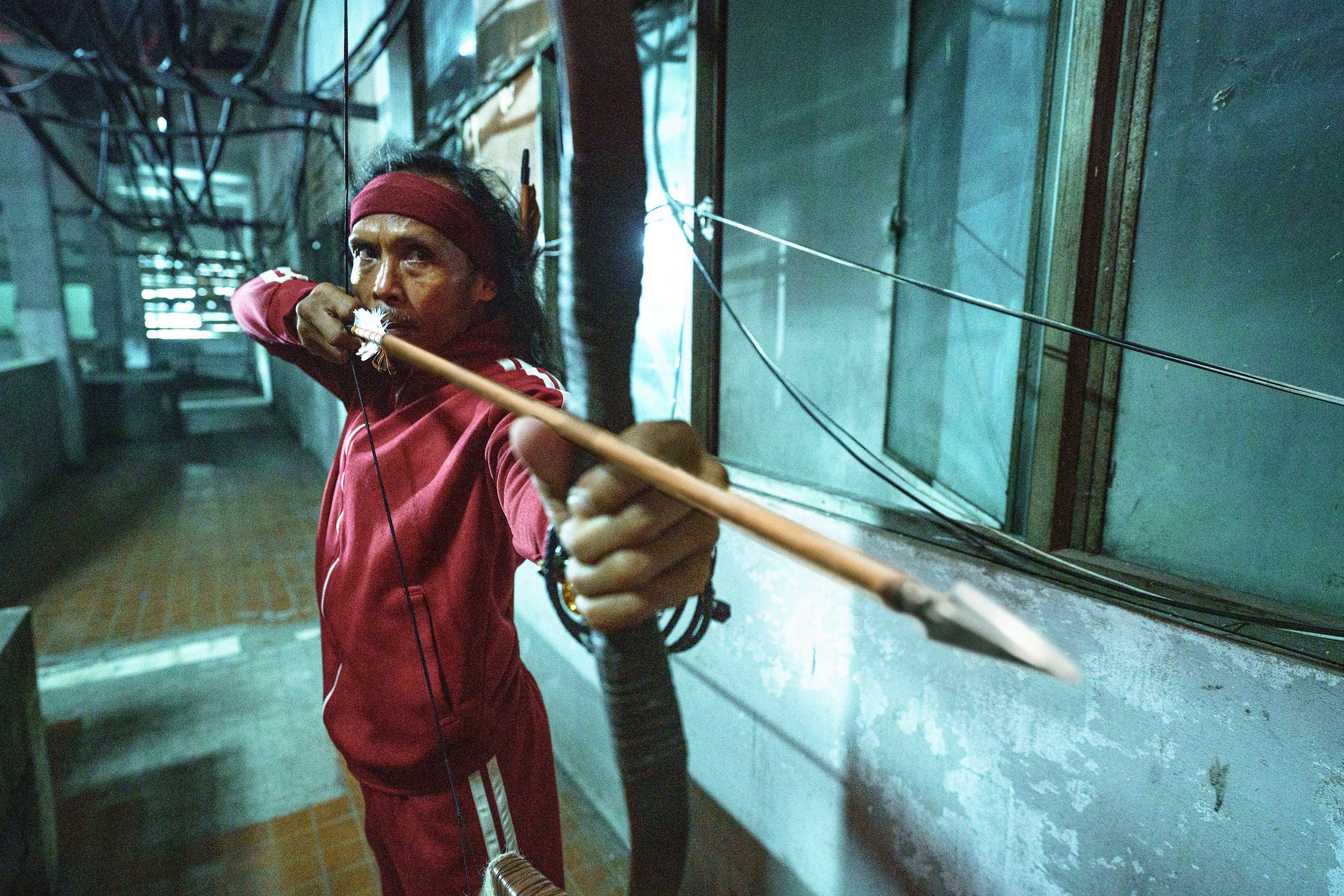
Another challenge was the choreography and fighting style created for my character. I had to use a bow as a close combat weapon in ways I had never done before. In fact, I had never even seen that kind of weapon used in short-range fighting the way it was designed for this film. It required me to learn completely new techniques and adapt to a very different style of action choreography.
Fortunately, the team led by Kensuke Sonomura was truly exceptional. Their creativity, knowledge, and attention to detail were incredible. I would like to thank the entire Sonomura team for everything they taught me. I learned so much from them, not only about action choreography, but also about martial arts techniques themselves. It was a rewarding experience and a valuable opportunity to grow as a performer.
FD: Do you think audiences still compare new martial arts films to The Raid? Is that exciting for you, or can it sometimes be limiting?
Yayan Ruhian: When The Raid was released, many people saw it as a game-changer for martial arts action cinema, especially in Indonesia, where that genre had been missing for quite some time. Even today, people still ask when The Raid 3 will finally happen.
In many ways, I feel that The Furious helps answer that question and fills the gap that action fans have been waiting to see filled. There has been a real hunger among audiences for a martial arts action film that delivers exciting fights, strong choreography, and memorable action sequences.
I could really feel that enthusiasm from audiences, starting with the screening at the Toronto International Film Festival and continuing through the recent gala premieres in Jakarta, Kuala Lumpur, Beijing, and Hong Kong. The reactions from viewers have been incredibly encouraging and have shown just how much people still love and appreciate martial arts action films.
I’m proud to be part of The Furious. It’s an action film that, in my opinion, delivers exactly what true martial arts action fans have been missing and waiting for, a film that celebrates the craft, intensity, and excitement of real action cinema.
FD: Has your approach to action changed over the years, especially when it comes to risk, preparation, or what the body can express on screen?
Yayan Ruhian: I learned so many new things while working on The Furious. It wasn’t just about learning new fighting techniques or working with different types of weapons. The choreography itself was unlike anything I had ever experienced before. The way the action sequences were designed and structured was incredibly unique, something I had never performed, never experienced firsthand, and honestly, had never even seen in other films.
That made the project a real challenge for me, but also one of the most rewarding experiences of my career. It pushed me out of my comfort zone and forced me to approach action performance in a completely different way.
What makes The Furious special, in my opinion, is that it introduces a fresh approach to fight choreography. The action feels innovative and distinctive, and I think audiences will see something they haven’t seen before in a martial arts action film.
The Furious opens in theaters in the U.S. and Canada on June 12, 2026. A Czech release date has not been announced yet, so my friends from Czechia will most likely have to wait for VOD or another form of digital distribution. And that is a shame. If any contemporary martial arts film demands to be seen on the big screen, it is this one.