At a time when travel is more accessible than ever, there is a growing demand for travel documentaries that offer a genuine experience and a confrontation with reality beyond the safe framework of tourist comfort. It is therefore no surprise that one of the most-watched titles on Netflix in the Czech Republic at the end of 2025 was Half Car, Half Boat, Full Trouble, documenting an 18,000-kilometre expedition from Prague to Ulaanbaatar in an amphibious LuAZ 967 vehicle.
What works for these contemporary expeditions today was already undertaken by Robert Bateman and Bristol Foster in the second half of the 1950s.
The Art of Adventure: Returning to a Different Kind of Experience
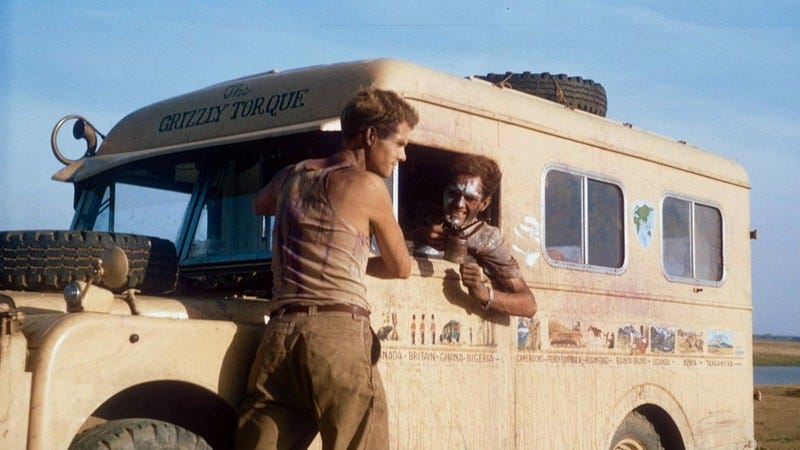
Childhood friends Robert Bateman and Bristol Foster purchased an old Land Rover in the 1950s, named it Grizzly Torque, and set off on a journey around the world without a fixed itinerary. Over eighteen months, they travelled more than 60,000 kilometres across four continents and nineteen countries. Their route took them from England by sea to West Africa, then overland through Central Africa to Mombasa, before crossing to India and continuing through Bombay and Calcutta to Australia. They embarked on the journey at a time when international travel was slow, unpredictable, and often dependent on improvisation and the help of local people.
During the expedition, Bristol Foster filmed extensive material using a 16mm film camera. He documented everyday travel, encounters with local communities, and technical challenges including moments when Grizzly Torque became bogged down in the mud of East Africa, as well as their first encounters with wildlife in the Serengeti.
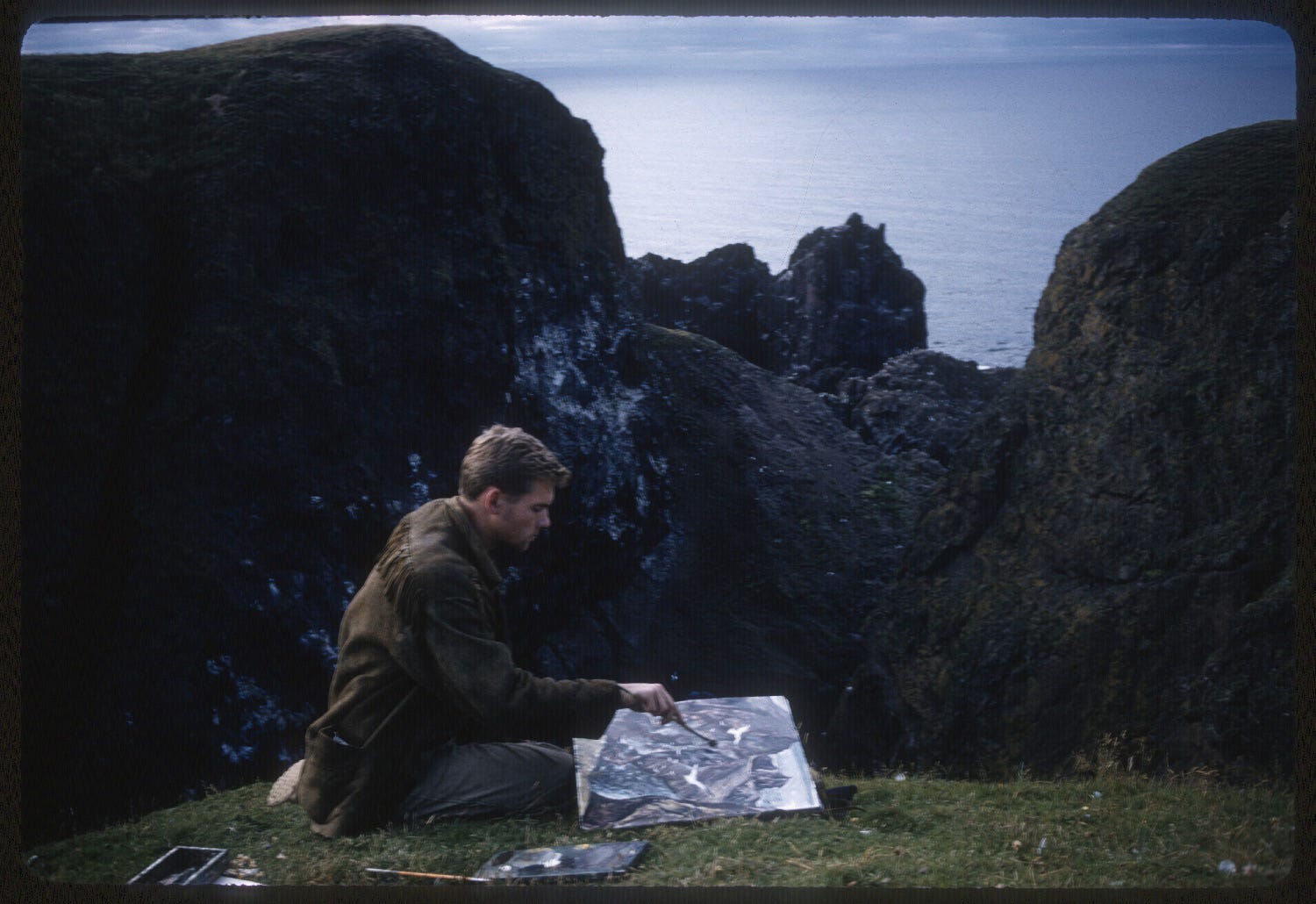
At the same time, Robert Bateman kept a visual journal. He drew, painted, and recorded landscapes, animals, and environments encountered along the way. Some of these works were created directly during the journey and later appeared on the vehicle’s bodywork itself. Grizzly Torque gradually transformed from a means of transport into a moving canvas and a physical archive of the expedition.
The second half of the film shifts toward reflection. It focuses on how both men now look back at what they filmed and painted at the time, and how these records shaped their lives.
The most emotionally resonant passages, however, are not only about the journey itself, their friendship, or the directions their lives later took. The film’s strongest emotional thread is the attempt to rediscover Grizzly Torque: the Land Rover they were forced to sell after returning home. The final act follows their search for the vehicle that became deeply meaningful to both men. After decades, can a car like this still be found, or has it long since disappeared into scrapyards and forgotten storage lots?
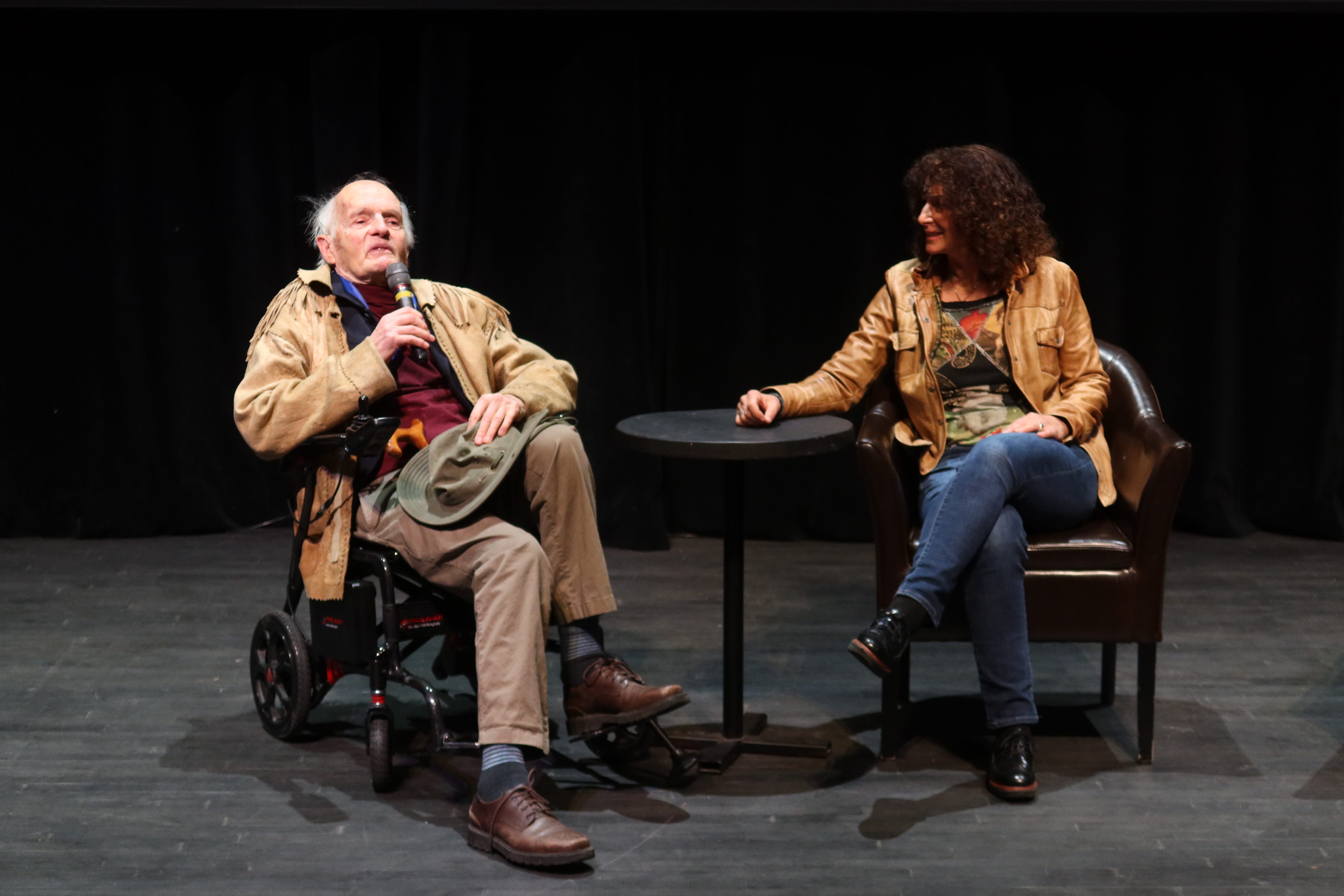
Following the film’s premiere at the Whistler Film Festival, the screening was met with several minutes of standing ovation, followed by a Q&A session with Bristol Foster and director Alison Reid. This immediate festival context may explain why the documentary felt more personal to me than many other festival titles. As someone who now lives in British Columbia and travels regularly, I sensed a story that felt distinctly local yet universally resonant.
It is no coincidence that The Art of Adventure received the Mountain Culture Feature Award for Best Documentary at the Whistler Film Festival.
Festival Context and Personal Perspective
For me, as a Czech viewer, the film carries an additional layer of meaning. It recalls the era of Jiří Hanzelka and Miroslav Zikmund, the Czechoslovak travel duo who undertook extensive expeditions across Africa, Asia, Latin America, and Oceania between the 1940s and 1960s, becoming some of the most influential travel figures of their time. Their books, reports, photographs, and films reached international audiences, were translated into multiple languages, and sold in millions of copies.
In this sense, The Art of Adventure shares common ground with their work primarily through its historical context. Both stories emerge from a period before the internet, satellite navigation, and mass tourism, when travel itself served as a source of information, imagery, and storytelling for audiences back home. Bateman, Foster, Hanzelka, and Zikmund travelled in an era when the world was explored through physical presence, handwritten notes, film footage, and drawings and when returning home marked the beginning of processing and sharing those experiences.
When I asked Bristol Foster after the screening what message he would give audiences today, his answer was simple: if you have any reason to travel, go. Not because the world is waiting, but because time is not.
Who Are the Protagonists?
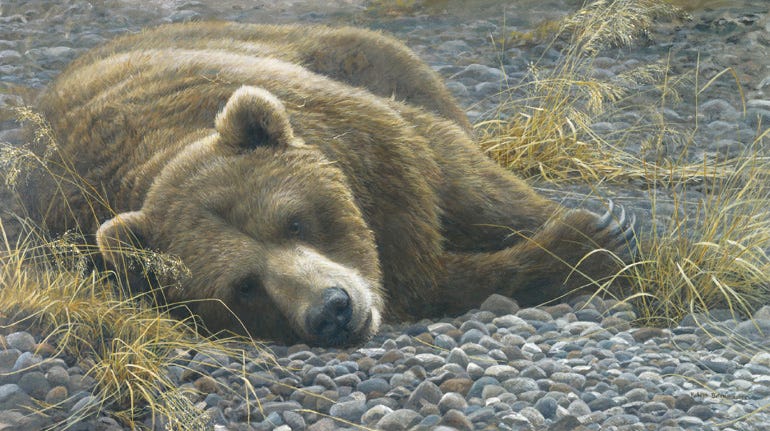
After returning from the journey, Robert Bateman devoted himself to teaching before establishing himself as a professional artist. A major turning point came in the 1970s, when he fully committed to realistic wildlife painting. His images of animals and landscapes spread far beyond galleries, reproduced in large print runs, books, calendars, and educational materials becoming part of the visual memory of several generations of Canadians. Through this wide public reach, Bateman became one of the most influential Canadian wildlife artists of the late 20th century, shaping public perceptions of the natural world long before the rise of digital media. His work is now represented in museum collections and is regarded as part of Canada’s cultural heritage, not merely as a product of the art market.
Bristol Foster studied biology at the University of Toronto, where his master’s research focused on the ecology of a rare Arctic rodent. After returning from his journey with Bateman, he spent five years in Kenya leading a postgraduate program in wildlife ecology. Back in Canada, he served as Director of the Royal British Columbia Museum and later as Director of the Ecological Reserves Program, overseeing more than 100 protected areas across British Columbia. Alongside this work, he contributed to nature and environmental documentaries and now works as an ecological consultant, focusing in part on the protection of remaining temperate rainforest ecosystems along the BC coast.
Director: Alison Reid
Canadian director, producer, and screenwriter Alison Reid has an unconventional professional background. She entered the film industry as a stunt performer and stunt coordinator, accumulating hundreds of credits across film and television productions. This extensive experience with physical action, on-location logistics, and demanding environments later shaped her directorial approach.
Reid gradually transitioned to her own authorial work. Her documentary The Woman Who Loves Giraffes (2018), about scientist Anne Innis Dagg, received significant international attention, screened at over fifty festivals, won multiple awards, and firmly established Reid as a documentary filmmaker with a focus on science, nature, and personal stories. Alongside documentaries, she has directed feature films and episodes of television series including Murdoch Mysteries, Good Witch, and Hudson & Rex.
Rating: 9/10 ⭐️⭐️⭐️⭐️⭐️
Document
Canada, 2025, 86 min
Director: Alison Reid
Writer: Alison Reid
Cast: Robert Bateman, Bristol Foster
Trailer:
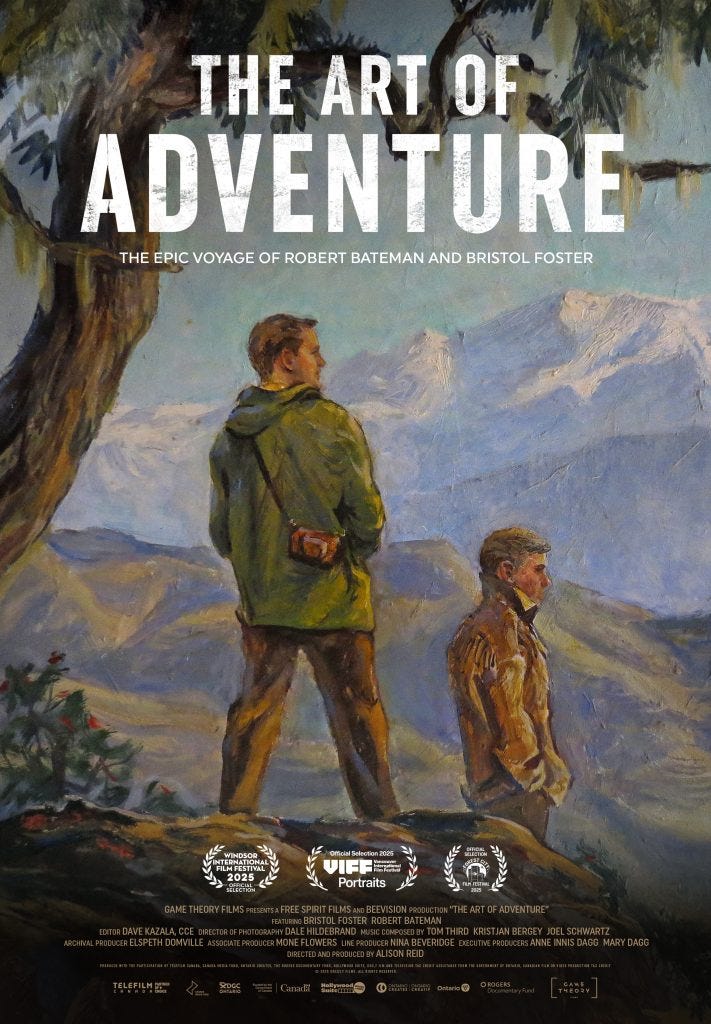
Poster: